
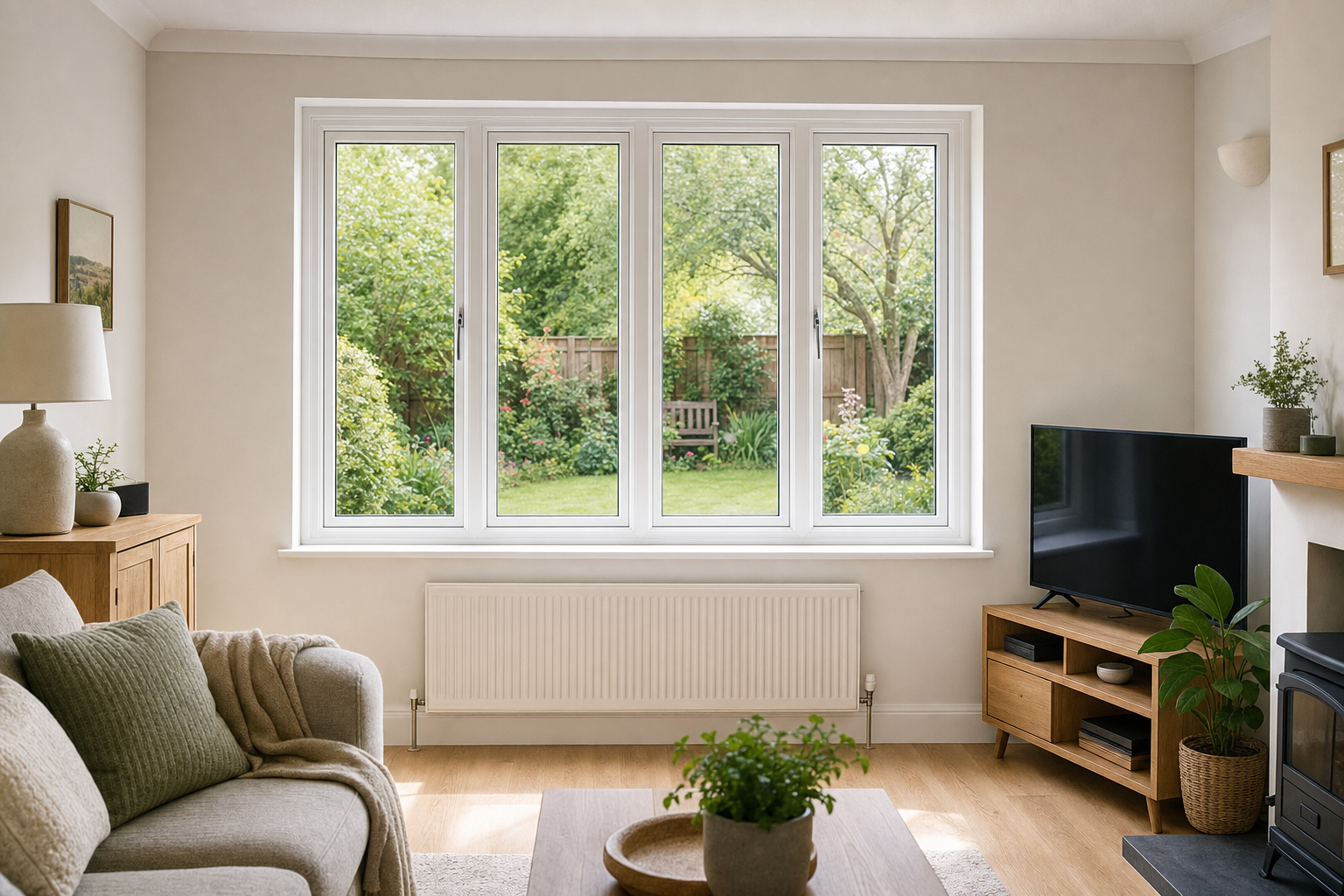
What better thermal performance helps you notice
Warmer rooms by the glass
Improved glazing and sealing can make cold window areas feel less harsh.
Less wasted heat
Thermally efficient windows help reduce avoidable heat loss from rooms.
Performance matched to use
Opening design and ventilation are considered alongside thermal values.
Warmer rooms start with windows that hold heat better
If the room always feels colder near the glass, the curtains move on a still day or one side of the house never seems to warm up properly, the windows are often part of the problem. Every window we supply is thermally efficient, which helps reduce heat loss, improve comfort and support lower energy use over time. That matters most in everyday life when the heating is on and the room still feels as though it is arguing with the weather outside. With Brookview Glaziers Ltd, the focus is on replacing ageing glazing with windows that improve the feel of the property as well as its appearance.


Performance depends on the whole window, not one part
Thermal performance comes from how the glazing, frame construction, spacers, seals and installation work together. We look at those combined factors, along with window energy ratings, opening design, ventilation and the condition of the surrounding opening, before the final choice is made. That helps if you are weighing up comfort, natural light and day-to-day use rather than chasing one figure in isolation. Choosing Brookview Glaziers Ltd in Alconbury means the installation is treated as part of the performance too, because even efficient windows need careful fitting and sealing if they are going to do the job properly.
Frequently asked questions
What makes a window thermally efficient?
It comes from the way the glazing, frame, spacers, seals and fitting all work together to limit heat loss. A good energy rating helps, but the best answer is a complete window that suits the opening properly and is installed carefully rather than one that relies on a single headline feature.
Will new windows help with draughts and cold spots?
They often can, especially when the existing glazing is ageing, the seals are poor or the old frames are no longer performing well. Better fitted, thermally efficient windows can reduce draughts, improve the feel of colder surfaces and help rooms hold heat more steadily through the day.
Do brighter rooms have to mean poorer insulation?
Not at all. Natural light and thermal performance can be considered together when choosing the new windows. The important part is thinking about the room as a whole, including glazing, opening style, ventilation and where privacy matters, rather than assuming warmth and light always pull in opposite directions.